July 28, 2025

9 mins

Destination: Devon & Cornwall

Share

In this article

A Guide to Walking the South West Coast Path

If you’re planning a hiking trip in the UK, there are few better places than the South West of England to pull on your walking boots. With its dramatic coastal paths, rolling fields, picturesque harbours, and sandy coves, it offers not only beautiful views but a touch of culture, too. 

While there are many short, daily rambles to be had along the Jurassic Coast and beyond, some of the most iconic routes are long, multi-day hikes, like the South West Coast Path, a 630-mile (1,014 km) trail along the coastline of England’s southwest peninsula.

In this guide to walking the South West Coast Path, we’ll cover everything from the key stages and daily recommended distances to where to stay.

Where is the South West Coast Path 

The South West Coast Path is located in the southwest of England.

South West Coast Path Map 

Is the South Coast West Coast Path, The Salt Path? 

The South West Coast Path and The Salt Path are not the same, though they are related.

The Salt Path is a book and film about a couple who walked the South West Coast Path. Based on real-life experiences, the book depicts the tale of Raynor Winn and her husband, Moth, who walked a significant portion of the South West Coast Path after facing personal hardships. If you enjoy reading, take a look at our ‘Devon and Cornwall Reading List’.

Where does the South West Coast Path start and finish? 

Located in the southwest of England, the South West Coast Path runs for 630 miles along the coastline from Minehead in Somerset, taking in North Devon, Cornwall, and South Devon, before ending at Poole Harbour in Dorset.

Start: Minehead, Somerset

End: Poole Harbour, Dorset

Distance: 630 miles

How long is the South West Coast Path? 

The South West Coast Path is 630 miles (1,014 km) and has a total of 115,000 feet (35,000 metres) of elevation.

How fit do you need to be to walk the South West Coast Path?

To walk the South West Coast Path, you need a reasonable level of fitness, especially for the more rugged and hilly sections – some parts involve steep climbs, uneven terrain, and long distances between facilities. 

However, you don’t need to be an elite athlete; the path is broken into manageable sections, so walkers of varying abilities can enjoy shorter day walks or choose gentler stretches, with longer breaks in between.

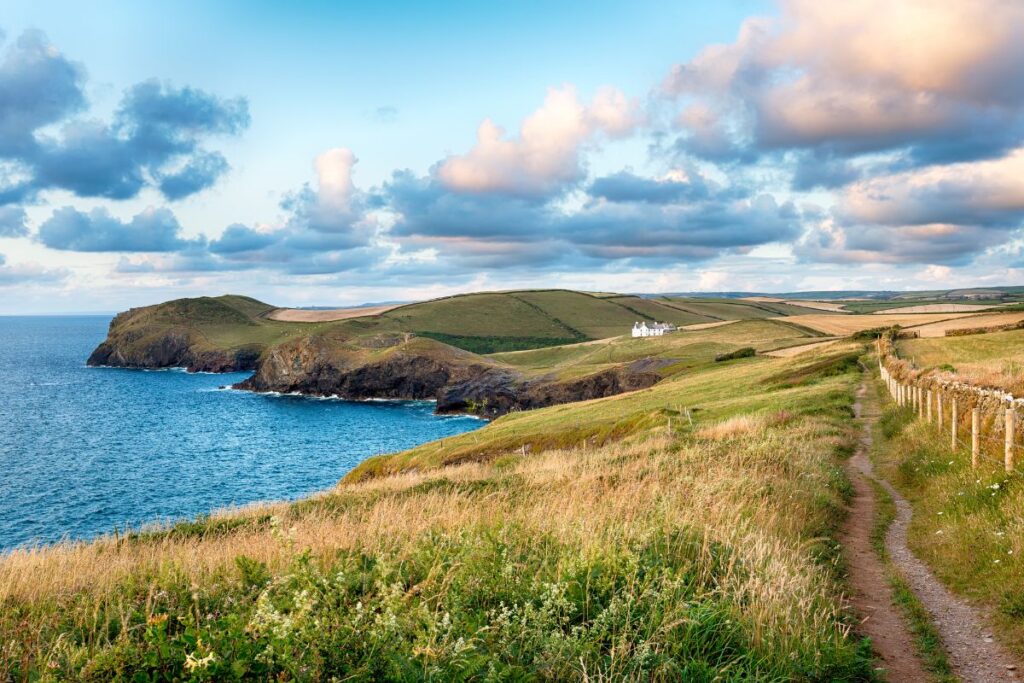
The South West Coast Path approached Port Quin - once a propserous fishing village, now just a collection of small cottages. Image: Helen Hotson

How long does it take to walk the South West Coast Path?

Walking the entire South West Coast Path typically takes 7 to 8 weeks, if you’re walking every day and averaging around 10 to 15 miles per day. That said, some people complete it in just 30 days, although this leaves little to no time for rest days and sight-seeing.

Many people will complete the South West Coast Path in chunks, as few of us have enough time to be able to walk it in one go. You’ll find that most will split it between several holidays, completing the path over several years.

Is the South West Coast Path well signposted? 

As a National Trail, the South West Coast Path is generally very well signposted. It’s marked with the acorn symbol, which is used for all National Trails in England and Wales, and there are frequent waymarkers at junctions and along the route. 

While navigation is relatively straightforward, it’s still a good idea to carry a map, compass and guidebook.

When is the best time to walk the South West Coast Path?

Spring and late summer are often considered the best times to walk the South West Coast Path, however, each season brings its own type of beauty.

Spring brings fresh growth and wildlife: lambs in the fields, flowers in bloom and cool crisp air that’s ideal for walking.

Summer is often the busiest time, especially in the popular towns, but it also means you can hike in ‘hopefully’ dry, warm weather. In late summer, the cliffs are covered in colourful heather and gorse.

Autumn is quieter and a little cooler, yet September usually holds onto some of the summer warmth. Seas are still suitable for swimming and trees take on rich red and gold hues as the weather turns.

Winter requires more planning due to shorter days and changeable weather, but offers a dramatic, peaceful experience – especially on stormy days, when the sea crashes against the cliffs.
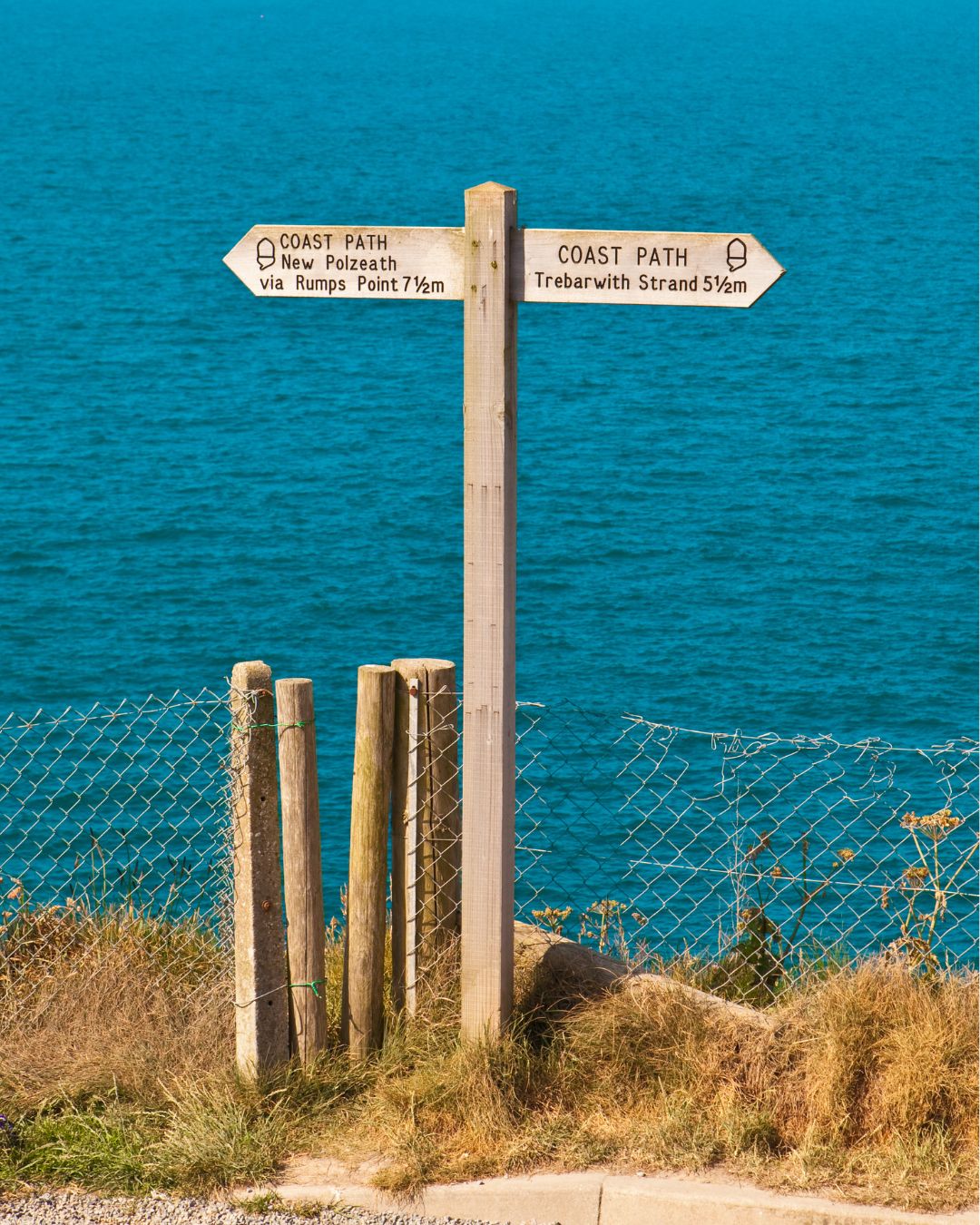
Though navigation on the South West Coast Path is fairly simple (keep the sea on your right! On your left if walking in reverse) the route is well signposted. Image: Tom Gowanlock

Stages of the South West Coast Path

The South West Coast Path is often split up into 6 to 8 regions, and within this roughly 52 sections. Generally, you can tackle a region over a few days – so it’s perfect for a long weekend.

Below, we’ve split the route by region, which you can then split into more manageable sections, depending on whether you want to do fewer days and lots of miles or less miles and more days.

Stage 1: Minehead to Westward Ho! (Somerset & North Devon)

Distance: 88 miles (142 km)

Stage one is often split into seven sections, taking in Somerset and North Devon. It sets the scene for the rest of the South West Coast Path, with the dramatic Exmoor cliffs, coastal woodlands and highlights including the beautiful seaside village of Lynmouth, the cobbled streets of Clovelly, and sweeping views from Countisbury Hill.

Minehead – Porlock Weir: 9 miles

Porlock Weir – Lynmouth: 12 miles

Lynmouth – Combe Martin: 13 miles

Combe Martin – Woolacombe: 13 miles

Woolacombe – Braunton: 15 miles

Braunton – Instow: 13 miles

Instow – Westward Ho!: 11 miles

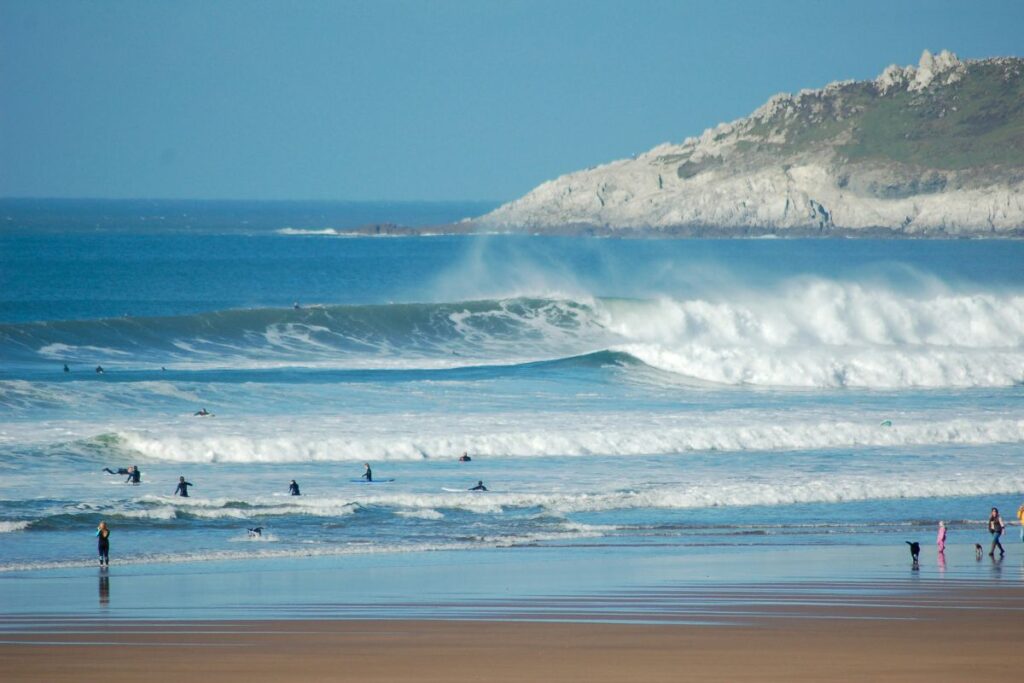
The beach at Woolacombe is a popular spot for surfing. Image: Croyde Surfing School, Unsplash

Stage 2: Westward Ho! to Padstow (North Cornwall)

Distance: 78 miles (126 km)

Typically split into six or seven sections, this stage takes in some of the wildest and most remote parts of the path. Expect rugged cliffs, sweeping headlands, and Atlantic winds. Highlights include Hartland Quay, the dramatic cliff walk into Bude, and the historic Tintagel Castle.

Westward Ho! – Clovelly: 11 miles

Clovelly – Hartland Quay: 10 miles

Hartland Quay – Bude: 15 miles

Bude – Crackington Haven: 10 miles

Crackington Haven – Tintagel: 11 miles (Days 5 & 6 can be grouped together for a longer day)

Tintagel – Port Isaac: 9 miles

Port Isaac – Padstow (incl. river crossing): 12 miles

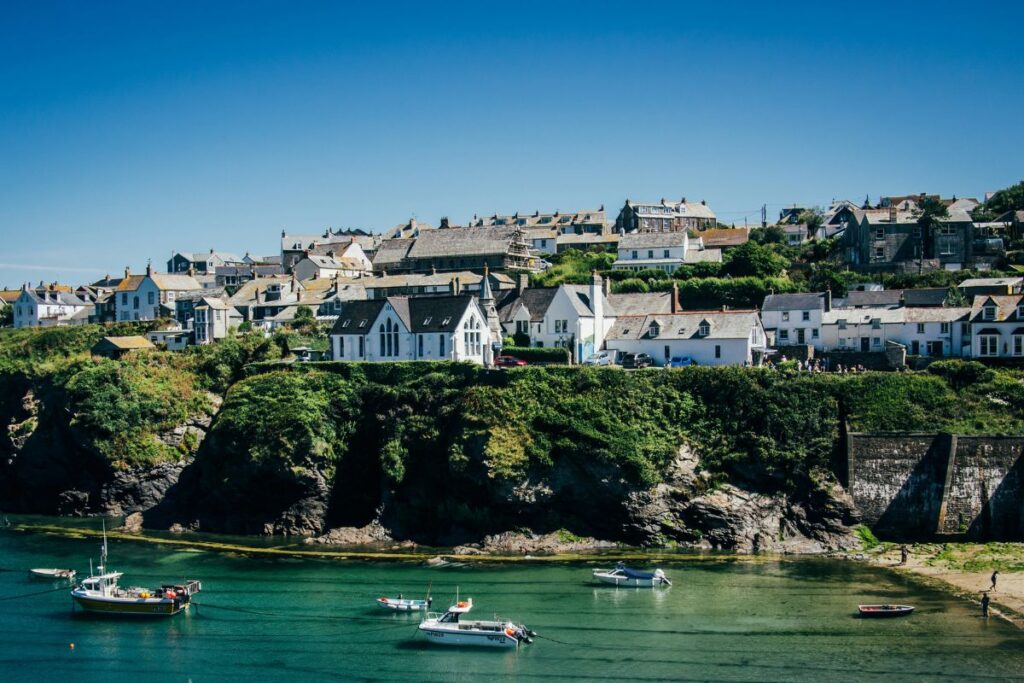
The popular fishing village of Port Issac. Image: Greg Willson, Unsplash

Stage 3: Padstow to St Ives (North & West Cornwall)

Distance: 74 miles (119 km)

Usually walked in five or six sections, this stretch combines fishing villages, surf beaches, and scenic estuaries. Key stops include the Camel Estuary, Newquay, Perranporth, and the remote moorland coast leading into St Ives.

Padstow – Porthcothan: 13.5 miles

Porthcothan – Newquay: 11 miles

Newquay – Perranporth: 11 miles

Perranporth – Portreath: 12 miles

Portreath – Hayle: 12 miles

Hayle – St Ives: 6 miles

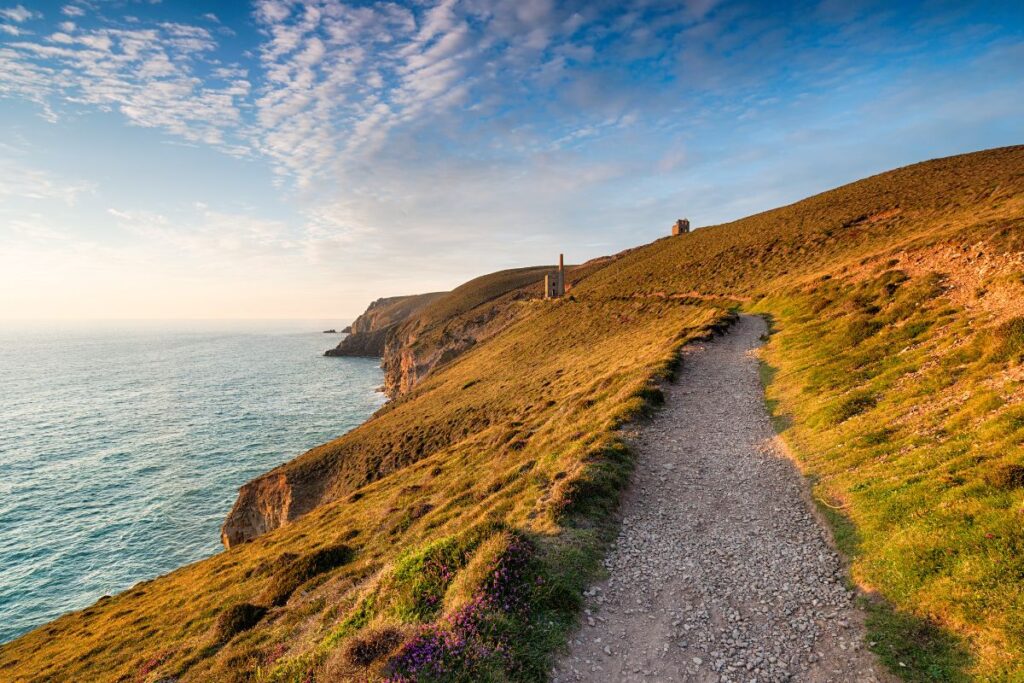
Evening light near St Agnes a good example of the conditions hikers will face under foot on this section of the South West Coast Path. Image: Helen Hotson

Stage 4. St Ives to Penzance (West Cornwall)

Distance: 37 miles (60 km)

This stage is often split into three or four sections – but don’t be fooled by the shorter distance as the walking is quite challenging here, especially between Zennor and St Just. Highlights include Land’s End, Sennen Cove, and the mining heritage of the Tin Coast.

St Ives – Zennor: 9 miles

Zennor – St Just / Sennen Cove: 10 miles

St Just – Sennen Cove / Land’s End: 9 miles

Land’s End – Penzance: 9 miles

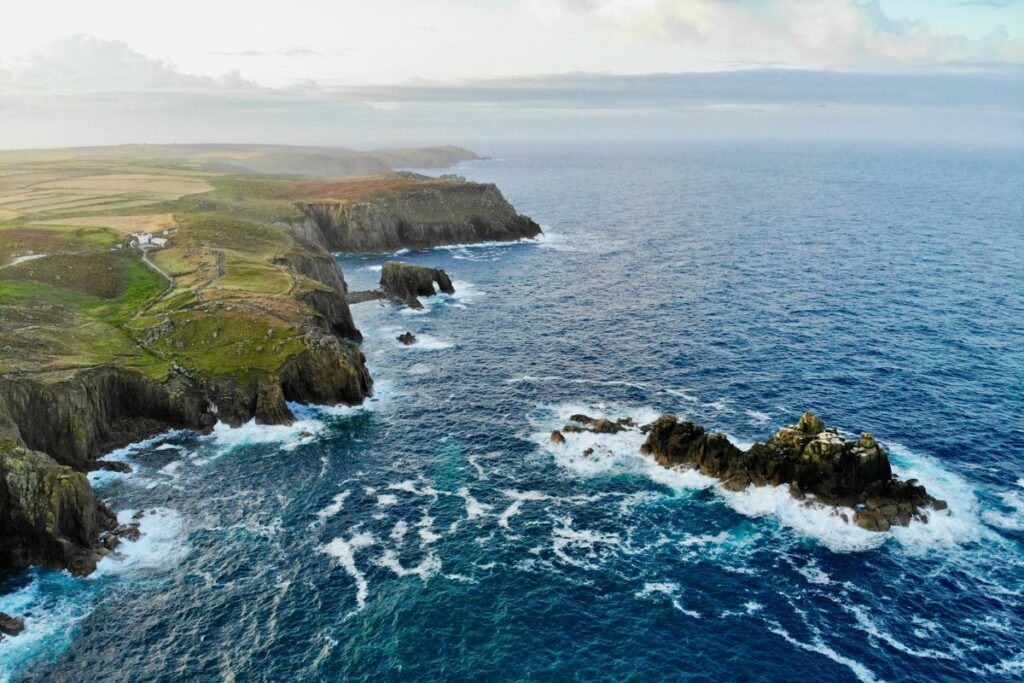
Steep cliffs and wild waters dominate the landscape at Land's End. Image: Benjamin Elliott

Stage 5. Penzance to Falmouth (South Cornwall)

Distance: 61 miles (98 km)

You can split this stage into four or five sections. It offers a gentler, more sheltered coastline with charming coves and fishing villages. Hikers will enjoy highlights such as Marazion and St Michael’s Mount, The Lizard (Britain’s southernmost point), and the riverside town of Helford.

Penzance – Porthleven: 14 miles

Porthleven – Lizard: 15 miles 

Lizard – Porthallow: 16 miles 

Porthallow – Falmouth: 16 miles

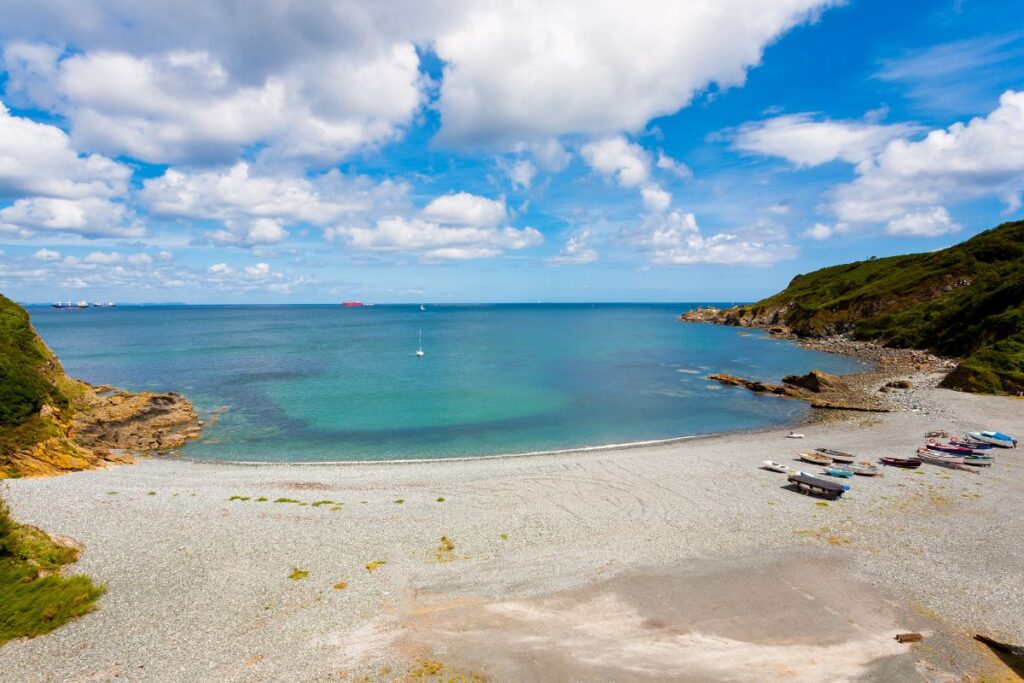
The secluded cove at Porthallow. Image: Ian Woolcock

Stage 6. Falmouth to Plymouth (South Cornwall & South Devon)

Distance: 76 miles (122 km)

Often split into six or seven sections, this part of the South West Coast Path offers endless views of the sea, heather, gorse and uplands, as well as lots of river crossings. It passes through the picturesque towns of Mevagissey, Fowey, and Looe, with plenty of chances to explore Cornwall’s maritime history.

Falmouth – Mevagissey: 10 miles

Mevagissey – Fowey: 12 miles

Fowey – Looe: 11 miles

Looe – Polperro: 9 miles

Polperro – Plymouth area/Milbrook: 12 miles

Coastal circuit to Plymouth: 10 miles

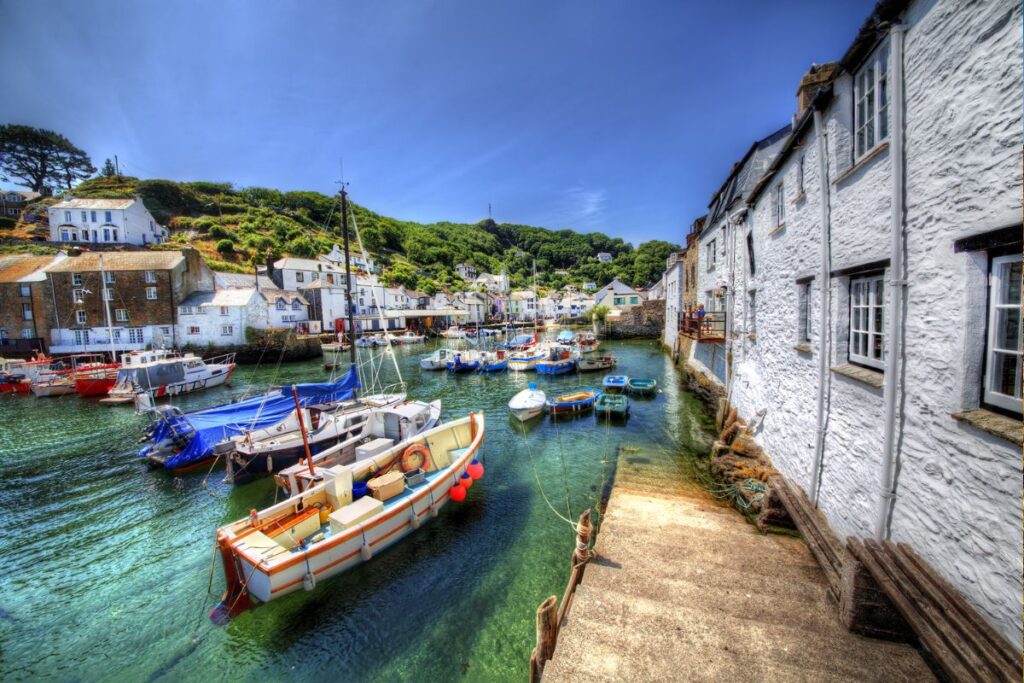
Fishing villages like Polperro a welcome respite for walkers on the South West Coast Path. Image: Rolf E. Staerk

Stage 7. Plymouth to Exmouth (South Devon)

Distance: 105 miles (169 km)

This long stretch is typically broken into seven or eight sections. You’ll cross from city to countryside, with highlights including the Erme Estuary, Salcombe, the English Riviera towns of Torquay and Babbacombe, and the stunning red cliffs approaching Exmouth.

Plymouth – Mothecombe: 12 miles

Mothecombe – Bigbury: 13 miles

Bigbury – Salcombe: 12 miles

Salcombe – Bantham: 14 miles

Bantham – Hope Cove: 12 miles

Hope Cove – Torcross: 13 miles

Torcross – Torquay: 14 miles

Torquay – Exmouth: 15 miles

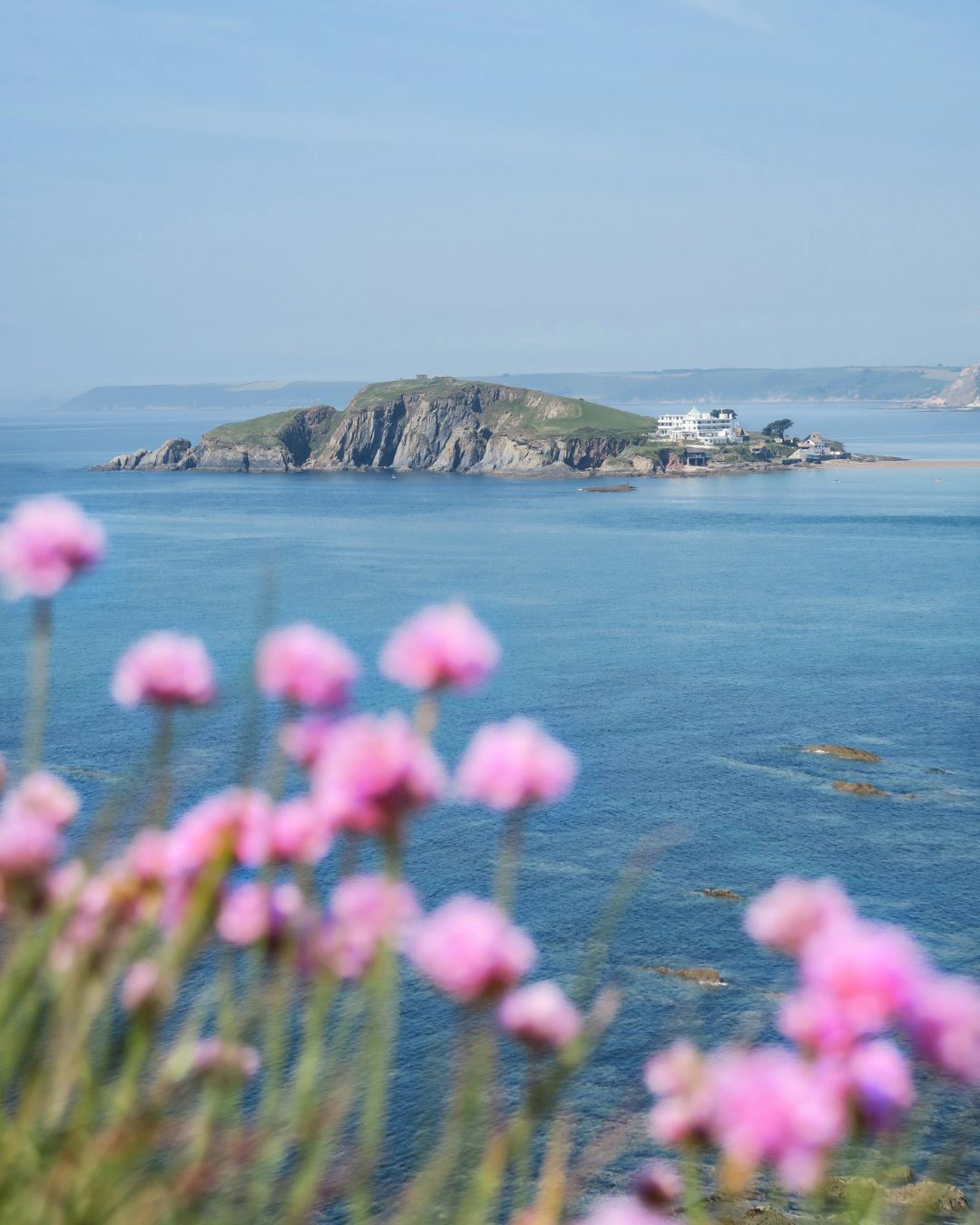
The stunning Burgh Island, seen from the mainland. This tidal island is famous for its Art Deco Hotel. Image: George Hiles, Unsplash

Stage 8. Exmouth to Poole Harbour (East Devon & Dorset – Jurassic Coast)

Distance: 115 miles (185 km)

The final stretch of the path is another long one, often broken up into eight or nine sections. The route follows the spectacular Jurassic Coast. Expect fossil-rich cliffs, dramatic landslips, and geological wonders. Highlights include Sidmouth, Lyme Regis, Golden Cap, Lulworth Cove, Durdle Door, and of course, the finish at Poole Harbour.

Exmouth – Sidmouth: 12.5 miles

Sidmouth – Beer: 8.5 miles

Beer – Lyme Regis: 8.5 miles

Lyme Regis – West Bay: 11 miles

West Bay – Abbotsbury: 9.5 miles

Abbotsbury – Weymouth: 10 miles

Weymouth – Lulworth Cove: 14 miles

Lulworth Cove – Kimmeridge: 7 miles

Kimmeridge – Poole Harbour: 14 miles

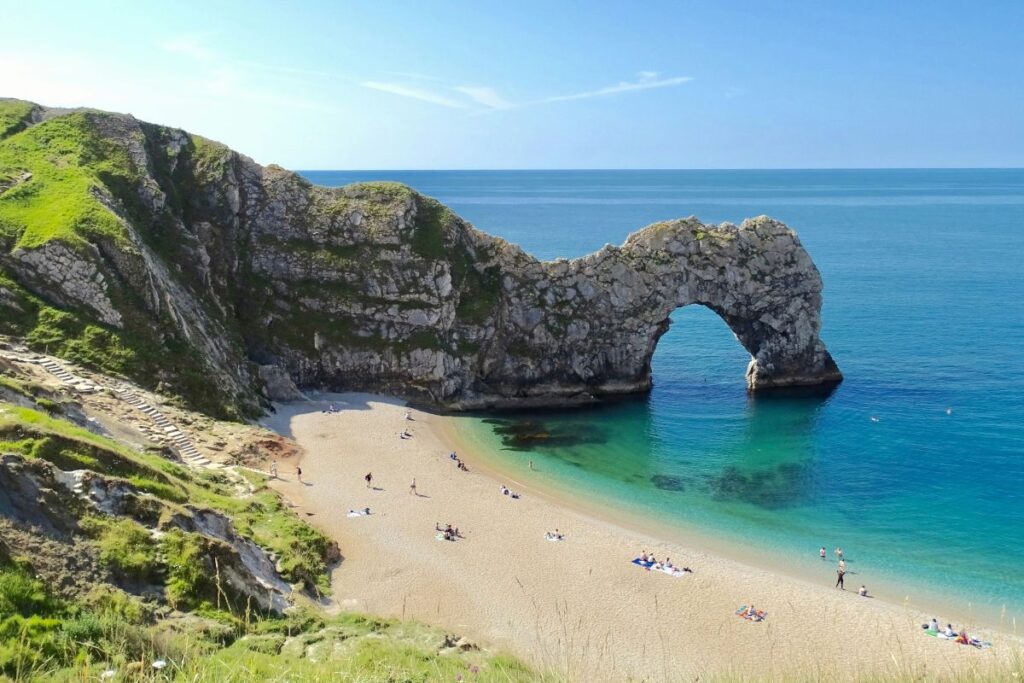
Durdle Door. Warning it can be very popular during summer! Image: Belinda Fewings, Unsplash

Best accommodation on the South West Coast Path

With plenty of guest houses, Airbnbs, camping sites, and hotels along the South West Coast Path, you won’t be short of places to stay.

Ash Farm, Porlock Hill 

Ash Farm, near Minehead is a great place to stay prior to the start of your hike.The guest accommodation has wonderful views overlooking the sea and offers a full cooked English breakfast to fuel you up for a big day of hiking.

Caravan and Camping, Lynmouth

Channel View is a great option for accommodation in Lynmouth, whether you’re staying one night or many. With on site facilities including a shop, launderette, modern heated toilet block, free hot showers, bathroom, and separate washing up area, it’s ideal for walkers who need a little extra amenities.

Rock House Hotel, Lynmouth

The Rockhouse is a small hotel, nestled between Lynmouths historic harbour and pebble beach. The Rockhouse has eight recently refurbished boutique en-suite bedrooms, a comfortable and stylish restaurant and bar, and a cosy private dining room.

Cranleigh House, Coombe Martin 

Cranleigh House was built as The Valley Hotel in 1860 to house the rush to Combe Martin due to the Silver Mines. Spacious and clean, the rooms have shared bathroom and shower facilities. Ideal for a quick stopover.

Ocean Backpackers Hostel, Ifracombe

Ocean Backpackers is a clean and homely hostel, which offers comfortable and spacious accommodation at great prices. Situated in Ilfracombe Harbour near to the bus station, shops, pubs and other amenities. Double rooms and family rooms are available.

Culloden House, Westward Ho!

A great place to end stage one of the South West Coast Path, this brilliant B&B has eight rooms and offers a friendly, comfortable stay.

Tregals, Padstow 

Tregals offers a range of self-catering holiday cottages, overlooking the Camel estuary. They are just a short walk into Padstow.

Carbis Bay Hotel 

Carbis Bay Hotel & Estate is a luxurious coastal hotel, spa, and estate with a privately owned 25-acre Blue Flag beach, impeccable service, fine food, superb spa facilities – the perfect spot if you really want to treat yourself to a wonderful stay.

Elmsdale Guest House, Penzance

Elmsdale Guest House is a beautifully restored period townhouse near the heart of Penzance. The five luxurious en‑suite rooms and hearty breakfasts make it a welcoming base for walkers about to head east. 

The Chain Locker, Falmouth

The Chain Locker is a charming 16th-century boutique hotel right on Falmouth’s historic quayside. Stylish rooms with harbour views and a cosy dining atmosphere provide a relaxing shoreline stop.

Penmere Manor Hotel, Falmouth

Penmere Manor is a Grade II listed hotel in Falmouth with lovely historic charm and leisure facilities – ideal for a restful night before heading into South Devon.

Victoria Inn, Salcombe 

A traditional pub with rooms, the Victoria Inn in Salcombe serves hearty local fare and offers a comfy, character-filled stop after a day’s walking through South Devon landscapes.

Imperial Hotel, Exmouth

The elegant Victorian Imperial Hotel sits in its own gardens along the seafront, offering sea-view rooms, a restaurant, bar, and easy access to the coastal path. It’s a classic, comfortable stay ideal for hikers.

Rock Point Inn, Lyme Regis

Rock Point Inn is a seafront pub with rooms situated beside the historic Cobb in Lyme Regis. It offers casual, coastal comfort, with local seafood and sea views to ground you after a day on the Jurassic Coast.

The Haven Hotel, Sandbanks 

The Haven is a Victorian-era four-star hotel on Sandbanks near Poole Harbour, offering upscale rooms and waterfront luxury. It’s an excellent way to mark the end of your epic 630 mile journey. 

For hikers looking for a walking tour in Devon or Cornwall, the South West Coast Path is a bucket list trip. Its length, elevation, and scenic variety could easily make it the longest, most difficult – but hopefully best – a hiker undertakes in their life. Whether tackled in sections or walked end-to-end in one trip, the South West Coast Path looks set to appeal for many years to come.

Experienced by

Lawrence

Marketing Manager

Leave a Reply

Your email address will not be published. Required fields are marked *

For security, use of CloudFlare's Turnstile service is required which is subject to the CloudFlare Privacy Policy and Terms of Use.

Scroll to Top

Enquiry Form

Please complete our form below. Alternatively, book a call here at a time that suits you.

    Enquiry Form

    Please complete our form below. Alternatively, book a call at a time to suit you here.